
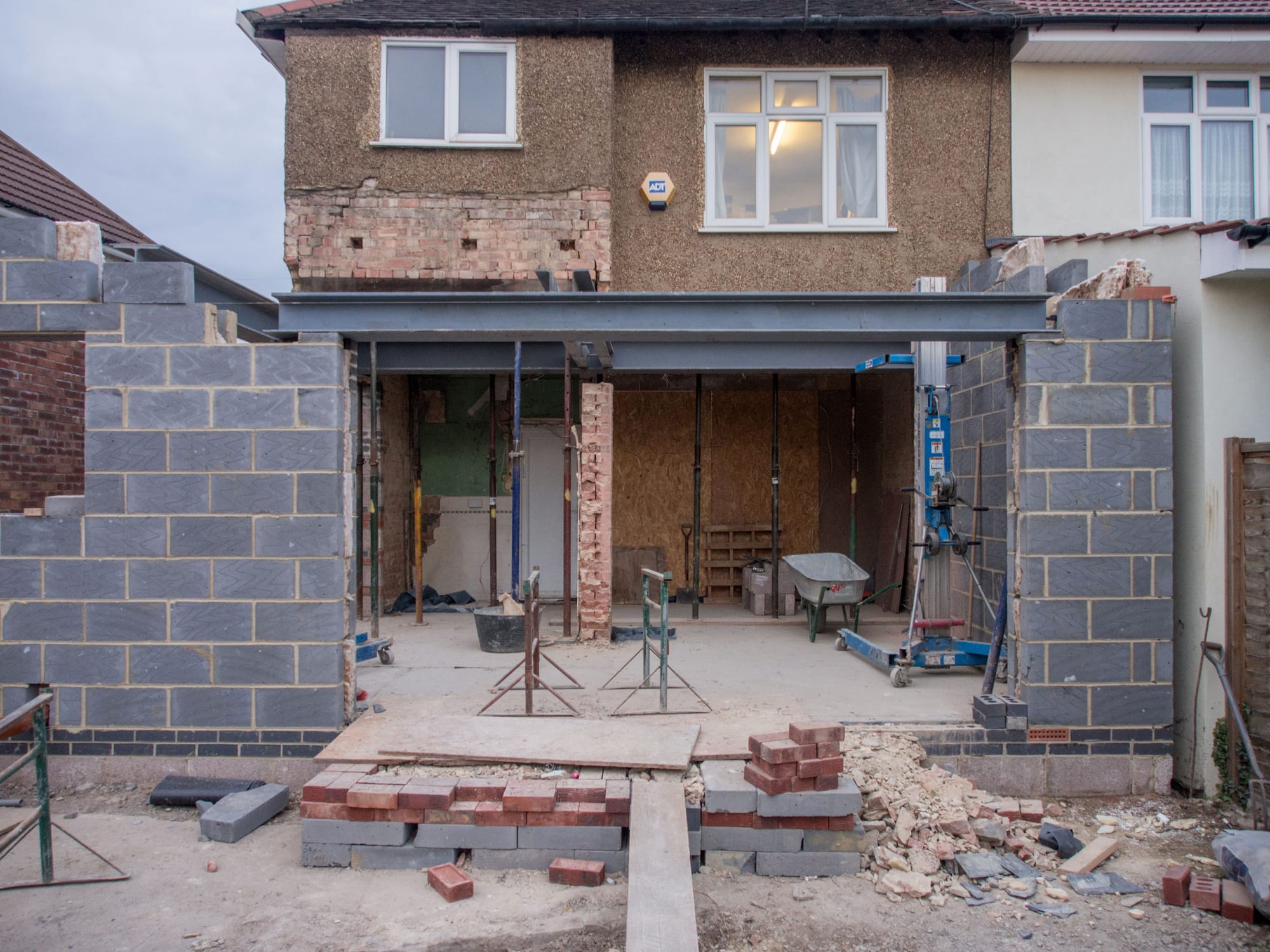
An extension is the cheapest opportunity most houses ever get to be wired properly. The walls are open, the floor is up, the electrician is already on site. Then it is plastered, and the moment is gone for another twenty years.
Here is what it actually costs to take that opportunity, and what it costs to keep the option open without committing.
The three numbers
Cable only: £600–£1,500 ex-VAT. A few hours of labour while the walls are open, plus the cable itself. No hardware, no programming, no decisions. You are buying the right to change your mind later.
A sensible specification: from £4,500 ex-VAT. Layered lighting for the new space, its own heating zone, wall controls that do more than switch, and the infrastructure to extend into the rest of the house.
A large open-plan extension: £8,000–£14,000 ex-VAT. Add automated blinds to the rooflights and bifolds, underfloor heating control with weather compensation, ceiling speakers, and zoning that reaches back into the existing house.
Why the same work costs three times more later
Cable in an open stud wall is pennies per metre and minutes per run. The identical route through a finished wall means lifting flooring or chasing plaster, making good, and redecorating — and on a rooflight blind it can mean scaffolding.
That is the entire argument, and it is why the decision point sits so early. Not “do you want a smart home”, but “do you want to keep the option”.
The problem nobody warns you about
The extension gets everything. Dimmable circuits, decent lighting design, underfloor heating on its own zone. The rest of the house keeps the pull cord in the bathroom and one thermostat in the hall.
Six months later the extension is the only room anyone uses in the evening, and the rest of the house feels like a different building. Fixing that afterwards means going back into finished rooms — exactly the cost you just avoided in the new part.
The fix is cheap if it’s planned: the right cable back to the consumer unit, a controller with spare capacity, and switch plates chosen so the two halves match when the older rooms are eventually brought in.
Where the money actually goes
Not on the cable, and not really on the switches.
Lighting design and dimming modules. Task, ambient and low-level circuits dimmed independently, with drivers sized to the actual load. This is what stops the buzzing and flickering that cheap dimming produces.
Shading. The glazing that makes an open-plan extension worth having is also why it hits 28°C in June. Blinds driven by sun position and room temperature deal with the gain at the glass. Cabling them before the ceiling closes is the difference between a few hundred pounds and a few thousand.
Heating control. A new open-plan space behaves nothing like the rooms it opens onto — different volume, different glazing, different solar gain. It needs its own target, and so does everywhere else.
Programming and commissioning. The part that turns circuits into something a household will actually use.
The honest recommendation
If your budget is tight, run the cable and stop there. It is the cheapest insurance in the whole build, it costs less than the tiling, and it removes the retrofit premium permanently.
If you have room in the budget, do the lighting and heating in the new space properly and leave the route back into the old house. That is the version people are still happy with in year five.
What we would not recommend is automating the extension in isolation with no plan for the rest of the house. That is how you end up with two buildings joined by a door.
Extension & open-plan automation → · Book a free site visit →
Jack Jones
Director, Westgate Property Solutions · Loxone Silver Partner