“Does a smart home actually save energy?” is one of the most common questions we get from East Midlands homeowners considering Loxone. The honest answer is: yes, but the saving comes from specific subsystems, and the figures vary wildly between a £300 smart-bulb-and-thermostat setup and a properly commissioned £20,000 whole-house system.
This guide gives you UK-specific numbers from actual Westgate installations, and explains why local-first control (Loxone) outperforms cloud-based smart kit on energy bills.
The four energy-saving subsystems that actually move the needle
Not every smart-home feature saves energy. The four that genuinely cut a bill in a UK property are:
- Per-room heating zoning — 15–25% off a typical gas bill.
- Solar self-consumption optimisation — lifts self-consumption from ~30% to 65–80%, saving £200–£600/year on a 4kW array.
- Smart EV charging on a time-of-use tariff — saves £400–£800/year versus charging on standard rates.
- Presence-based lighting — 10–20% off the lighting portion of an electricity bill.
Everything else (smart blinds, smart kettles, voice control) is a quality-of-life feature, not an energy-saving one. Beware any installer who claims otherwise.
1. Per-room heating zoning — the largest single saving in most homes
Most UK homes are heated to one temperature on one schedule across every room. A guest bedroom used twice a year sits at 20°C every winter morning. A home office used Monday to Friday is cold on the days you actually need it.
Loxone solves this with a local Miniserver coordinating per-room TRVs (or per-zone underfloor heating manifolds in newer properties). Each room has its own setpoint, schedule and presence-based override. The system knows when you wake up, when you leave for work, when the kids come home from school, and it heats only what’s occupied.
Real figures from a Sheffield install (4-bed detached, gas combi boiler):
| Metric | Before Loxone | After Loxone |
|---|---|---|
| Annual gas use | 18,400 kWh | 14,100 kWh |
| Annual gas bill (at 7p/kWh) | £1,288 | £987 |
| Annual saving | — | £301 |
That’s a 23% reduction with no comfort compromise. The owner reported the house was actually warmer in occupied rooms after the install — because previously the boiler was wasting capacity heating an empty utility room.
2. Solar self-consumption — the biggest single Loxone advantage
If you have solar PV, this is where Loxone separates itself from every cloud-based smart system on the market.
A typical UK home with a 4kW array generates 3,500–4,000 kWh/year. Without smart load shifting, the household uses about 30% of that and exports 70% to the grid. The export price is 4–8p/kWh (SEG); the import price is 25–35p/kWh. The maths is brutal.
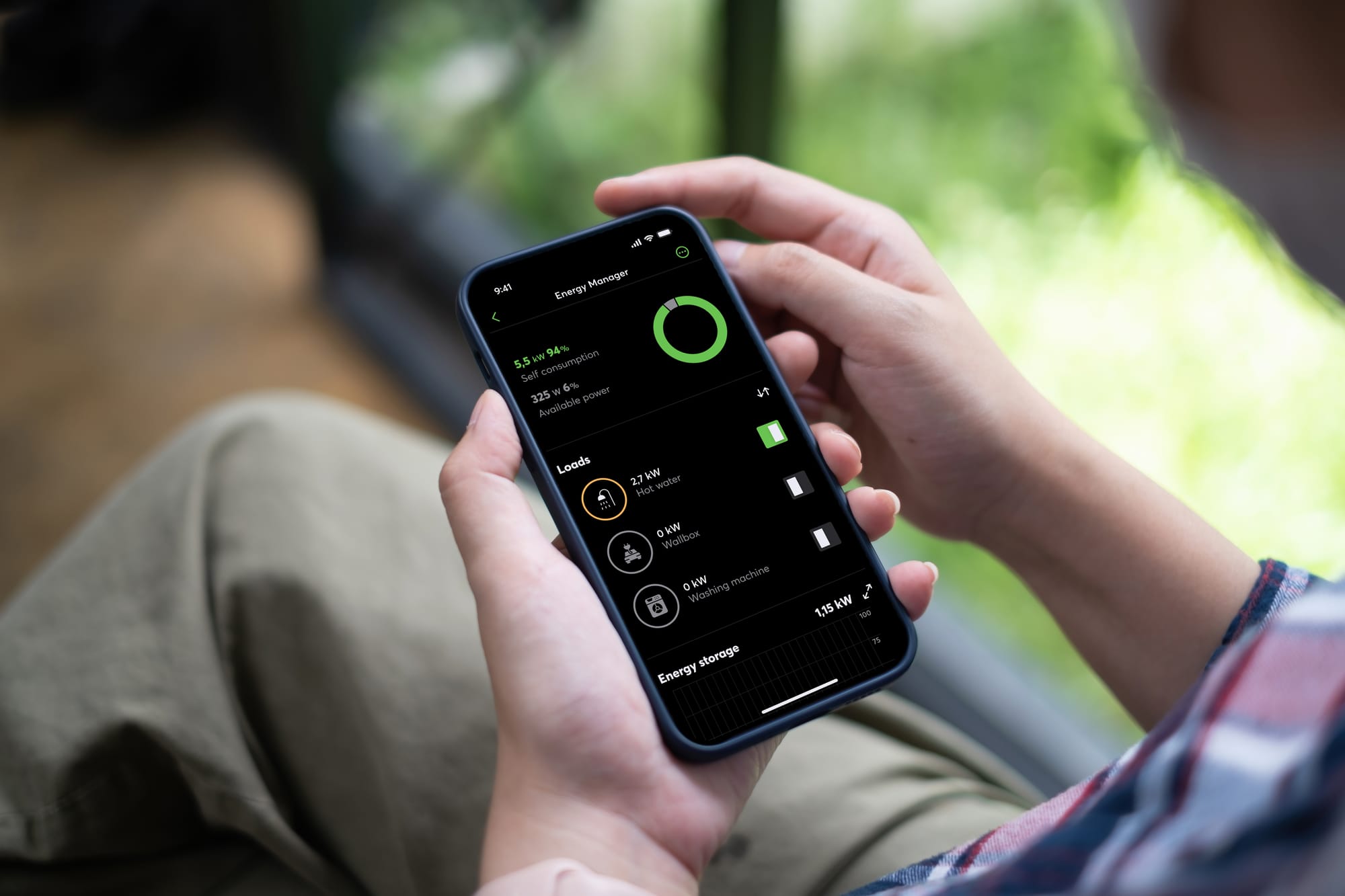
A Loxone Miniserver reads live generation from the inverter, then decides — in real time — which appliances to run. On a sunny day at 1pm it will:
- Switch the immersion heater on to charge the hot water cylinder.
- Release the dishwasher to start its cycle.
- Bump the EV charger from 3kW to 7kW to absorb the excess.
- Override the heat pump to top up the buffer tank.
Real Westgate data from a Derbyshire barn conversion with 6.4kW solar and a 10kWh battery: self-consumption went from 34% (pre-Loxone) to 71% (post-Loxone). On a £1,400/year electricity bill, the saving was approximately £580/year. The energy-saving portion of the Loxone install paid back in just over 8 years.
3. Smart EV charging on a time-of-use tariff
If you have an EV, you should be on a tariff like Octopus Go, Intelligent Octopus or EDF GoElectric. These give you 5–10p/kWh in the early hours instead of the 25–35p standard rate.
Most EV chargers can schedule a charge window. Loxone goes further: it watches the tariff, the battery state, your calendar and the solar forecast, then schedules the charge for whichever combination of cheap-grid and free-solar minimises the bill. In summer, that often means no grid charging at all.
Typical saving: £400–£800/year for a household doing 10,000–15,000 EV miles.
4. Presence-based lighting
Smart LED bulbs save energy versus halogens — but mostly because they’re LED, not because they’re smart. The genuine smart saving comes from presence-based scheduling: lights that go off automatically when a room is empty, and dim to amber after 9pm.
A 4-bed UK home spends £180–£300/year on lighting. Properly automated, that drops by 10–20% — £20–£60/year. It’s the smallest of the four savings, but it’s free once the Miniserver is in.
Why Loxone beats cloud-based smart kit on energy
Hive, Nest, Hue and Tado all save some energy in isolation. None of them coordinate. Your Hive thermostat doesn’t know your solar inverter is generating. Your Hue lights don’t know the room is empty. Your Tado TRVs don’t know the kids’ bedtime routine.
A Loxone Miniserver runs locally, sees every subsystem, and acts in real time. It doesn’t need to round-trip a request through a manufacturer’s cloud. It doesn’t stop working when your broadband drops. It doesn’t charge a monthly fee.
That coordination is where the real money is. Standalone smart heating saves you 15%. Standalone solar diverters lift self-consumption to 50%. A Loxone Miniserver doing both — together, with EV and lighting on the same controller — gets you to the 30–40% total household saving that makes the install pay for itself.
If you have a swimming pool, none of the above is your biggest number. Pool plant is usually the largest single load on a domestic supply — see pool, spa and sauna automation for what measuring and scheduling it actually saves.
What this costs to install
A Loxone energy-management retrofit on an existing property — adding solar self-consumption logic, EV control, heating zoning and lighting — typically lands in the £8,000–£15,000 ex-VAT range, depending on cabling complexity and how many existing systems need integrating.
New-build M&E specification is cheaper because pre-wiring during first fix avoids retrofit labour. See our Loxone self-build service →
For garden rooms and outbuildings, the energy-management hardware is included in the standard tier packages. See garden room tiers →
Next steps
If you’re in the East Midlands and want a fixed-quote energy-management retrofit, book a free site visit →. We cover Nottingham, Derby, Sheffield, Chesterfield, Mansfield, Lincoln and the surrounding postcodes.
Want to understand the full Loxone offer first? Read home automation in the UK → or whole-house automation →.
Jack Jones
Director, Westgate Property Solutions · Loxone Silver Partner