

Structured cabling · Wi-Fi design · Comms racks
The wiring everything else depends on, done once and properly.
Cat6 structured cabling, designed Wi-Fi coverage and tidy comms racks across the East Midlands. The unglamorous layer that decides whether everything else in the house actually works.
Almost every smart home problem we are called out to fix is a network problem wearing a costume. The television buffers, the cameras drop out, the speaker in the back bedroom stutters, the app is slow from the garden. None of those are faults in the devices. They are a single consumer router in a hallway cupboard being asked to cover a three-storey house with solid walls.
What's included
- Cat6 structured cabling to every required point
- Patch panel and comms cabinet, labelled and documented
- Wi-Fi access point siting from the building's construction
- Ceiling-mounted access points, wired back to the cabinet
- Network switch and PoE for cameras and access points
- Garden room and outbuilding links
- Cable schedule and as-built documentation
- Testing and certification of every terminated run
From £1,600
ex-VAT, supplied, installed & commissioned

01 · The fix
Structured cabling, terminated somewhere sensible
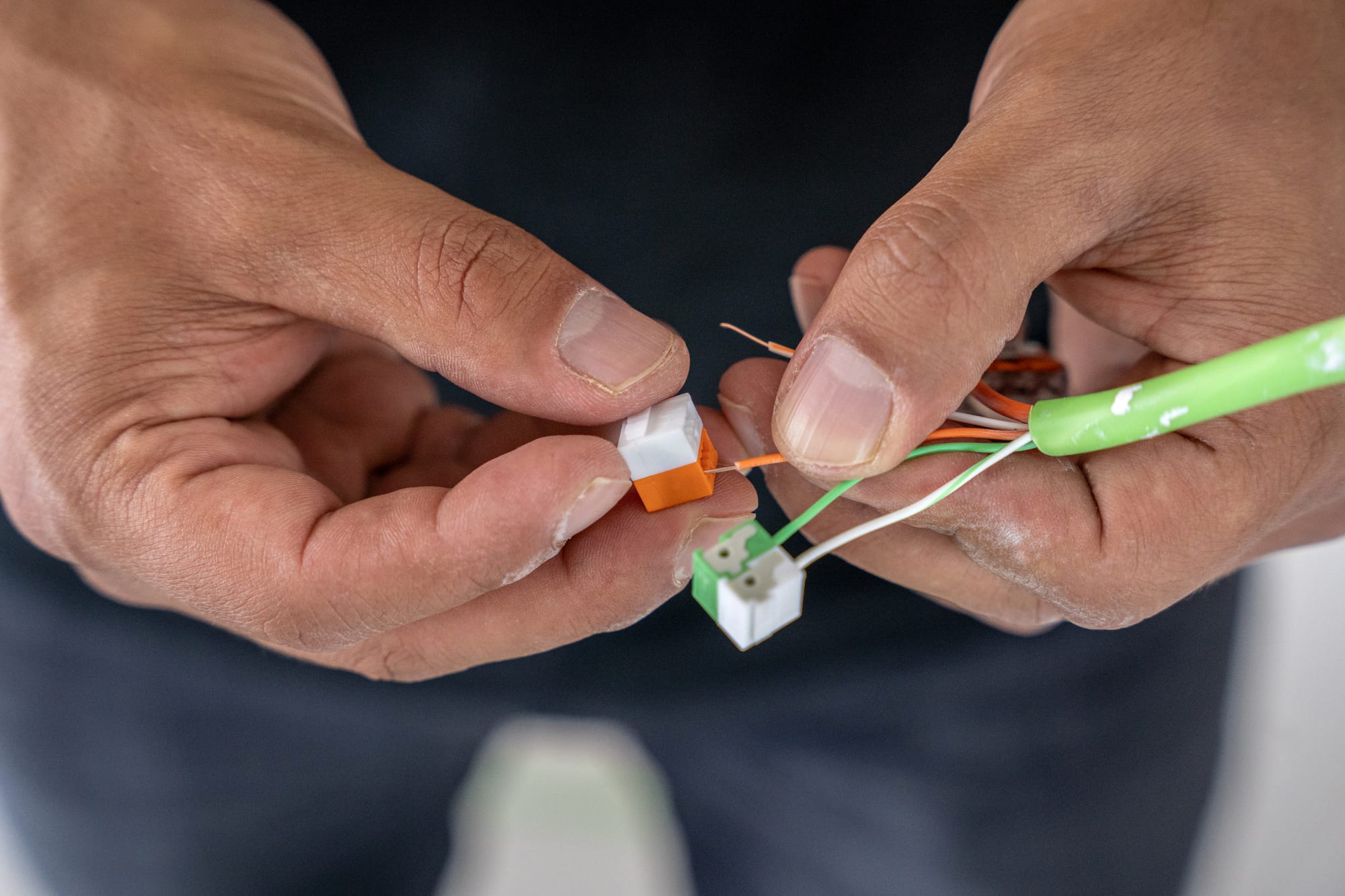
Cat6 runs from a central position to every point that benefits from a wired connection — televisions, access points, cameras, the office, the garden room — terminating in a patch panel in a comms cabinet rather than a nest of adapters behind a sideboard.
Anything wired stops competing for airtime, which immediately improves the wireless for everything that genuinely needs to be wireless.
- Cat6 to every point that benefits from it
- Patch panel and cabinet, labelled and documented
- PoE for cameras and access points
- Garden room and outbuilding links included
02 · Wi-Fi
Designed from the building, not hoped for
Multiple ceiling-mounted access points, wired back to the cabinet, positioned from the building's actual construction rather than a coverage map that assumes plasterboard.
Solid walls, foil-backed insulation and stone all attenuate signal severely. A survey costs far less than discovering that after the plastering is finished.
- Access points sited from the real construction
- Ceiling-mounted, wired back to the cabinet
- Survey before the walls close
- Vendor-neutral — we don't sell one brand
03 · Timing
The cheapest thing you will ever do, and the one most people skip
Cat6 at first fix costs very little per point. The same routes retrofitted afterwards can cost several times more and involve lifting floors.
Even if you never use half the points, run them. They are the infrastructure every other system on this site sits on.
- Pennies per point at first fix
- Multiples of that retrofitted later
- Run spares — they cost almost nothing now
- Tested, certificated and documented
Why it's worth doing properly
Home Network & Structured Cabling, done once and done right.
Fixes the real cause
Most 'smart home' faults are network faults. Cabling the fixed devices frees the wireless for things that must be wireless.
Cheapest at first fix
Cat6 during a build costs a fraction of the same routes retrofitted. Run more points than you think you need.
Wi-Fi that's designed
Access points sited from your actual walls. Solid stone and foil-backed insulation defeat coverage maps drawn on a plan.
A cabinet, not a nest
Labelled patch panel and documented schedule, so anyone can work on it in five years without tracing cables by hand.
Outbuildings included
A proper link to the garden room or office, rather than a repeater that halves throughput and drops twice a day.
Vendor-neutral
Structured cabling outlives every device plugged into it, whatever platform you end up choosing.

Certified installers, never sub-contracted
Same week
Site visit availability across the East Midlands
£0 / mo
No subscription, no cloud fees, ever
12 months
Parts and labour warranty on every install
Works best together
Related services
One Miniserver runs all of it. Most customers combine two or three of these rather than installing them as separate systems.
FAQ
Home Network & Structured Cabling — common questions
How much does home network cabling cost?
Isn't Wi-Fi good enough now?
How many network points should I run in a new build?
Can you get a proper connection to a garden room?
Do I need this if I'm having a Loxone system installed?
Will you tidy up an existing installation?
Is Cat6 enough, or should I run Cat6a or fibre?
Where we work
Network & cabling across the East Midlands
Next step
Thinking about network & cabling?
Free site visit, fixed written quote within 5 working days. No obligation, and no pressure — if a full system isn't right for you we'll tell you.
Book a free site visit