
Lighting design · Scenes · Dimming · Circadian control
Smart lighting installation, wired properly and designed by layer.
Whole-house lighting control across the East Midlands. Proper dimming, RGBW colour, scenes that suit how the room is used, and daylight tracking — wired in, not plugged in.
Smart bulbs are where most people start and where most people get stuck. They work, roughly, until someone flicks the wall switch and the bulb loses power — then the app can't reach it, the voice assistant says the light is unavailable, and everyone goes back to using the switch. The bulb was never the problem. Putting the intelligence in the bulb was.
What's included
- Room-by-room lighting design and circuit schedule
- Dimmable LED drivers sized to the load
- RGBW colour control where it's wanted
- Wall switches that keep working as switches
- Scene programming for each room
- Presence detection on corridors, bathrooms and stairs
- Circadian / daylight colour-temperature tracking
- Commissioning, handover and a 14-day adjustment visit
From £3,200
ex-VAT, supplied, installed & commissioned
01 · The approach
Intelligence in the consumer unit, not in the bulb
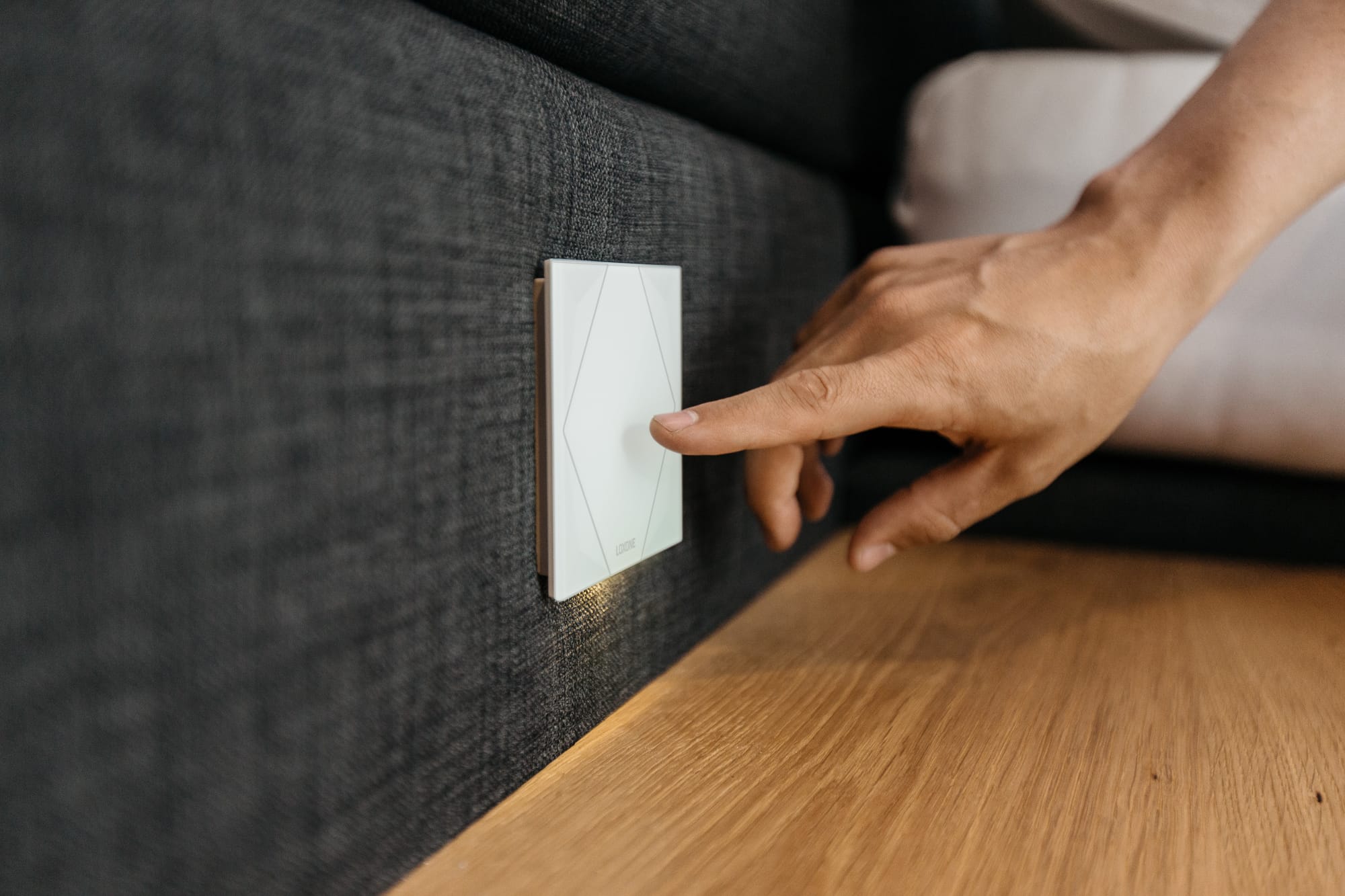
The wall switches stay switches — they just do more. A single press turns the room on at the level it should be, a double press sets a scene, a long press dims.
The bulbs stay dumb, cheap and replaceable, and nothing breaks when somebody uses the wall. That is the whole difference between a system and a shelf of gadgets.
- Dimming and logic in the consumer unit
- Wall switches keep working as wall switches
- Bulbs stay standard, cheap and replaceable
- Nothing to reconnect after a power cut
02 · Design
Layers, not brightness
A kitchen needs task light over the worktop, ambient light for the room, and something low and warm for eleven at night. Most houses have one bright ceiling pendant doing all three jobs badly.
We set the layers out at design stage, dim each independently, and group them into scenes — so you press one button rather than four.
- Task, ambient and low-level treated separately
- Each layer dimmed on its own circuit
- Scenes replace a row of switches
- RGBW where it earns its place, not everywhere

03 · Automation
Where it stops being a gadget
Corridors and bathrooms on presence detection at 20% overnight, so nobody hunts for a switch at 3am. Daylight tracking that lifts colour temperature in the morning and warms it after sunset.
Lights that dim themselves when the cinema starts. None of it needs an app open, which is the test of whether automation is actually working.
- Presence detection on corridors, stairs and bathrooms
- Circadian colour-temperature tracking
- Scenes triggered by what the house is doing
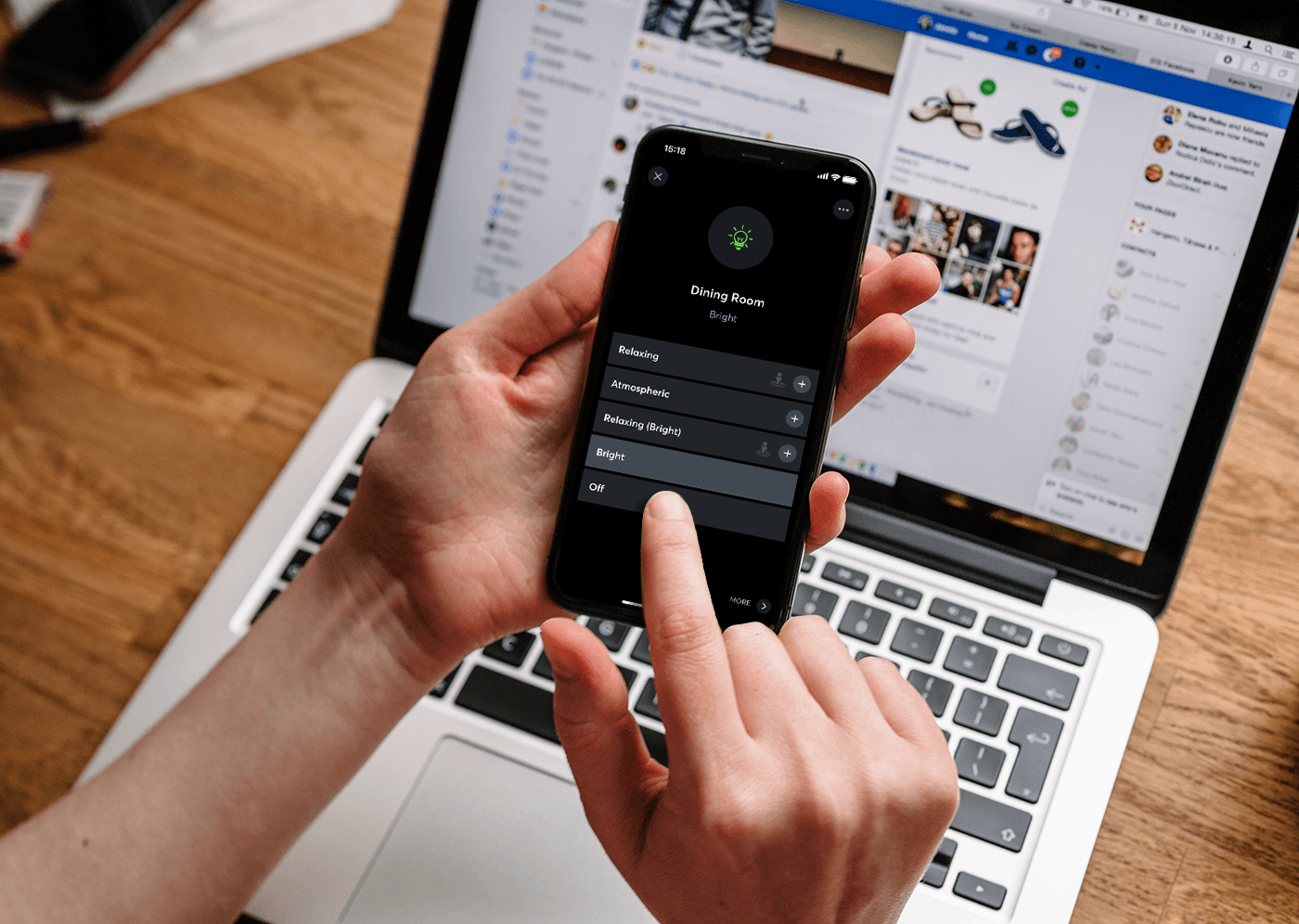
- No app open, no phone in hand
Why it's worth doing properly
Smart Lighting Installation, done once and done right.
The wall switch still works
Nothing depends on an app being open or a phone being charged. Guests, kids and cleaners use the wall and it behaves.
Dumb bulbs, smart circuits
Control lives in the consumer unit, so replacement lamps cost a few pounds rather than £40 each.
Proper dimming, no flicker
Drivers matched to the actual load. Cheap dimmers on LED loads buzz and flicker at the bottom of the range — these don't.
Scenes, not switches
One press for 'cooking', one for 'evening', one for 'everything off downstairs'. Four circuits, one button.
Corridors on presence
Low-level light at night that comes on before you need it and goes off after. Nobody wakes the house up at 3am.
Daylight tracking
Cool and bright in the morning, warm and low after sunset — automatically, without anyone adjusting anything.

Certified installers, never sub-contracted
Same week
Site visit availability across the East Midlands
£0 / mo
No subscription, no cloud fees, ever
12 months
Parts and labour warranty on every install
Works best together
Related services
One Miniserver runs all of it. Most customers combine two or three of these rather than installing them as separate systems.
FAQ
Smart Lighting Installation — common questions
What's the difference between smart bulbs and a smart lighting system?
Do I need to rewire the whole house?
How much does smart lighting installation cost?
Will it work with my existing light fittings?
What is circadian or daylight-tracking lighting?
Can I add colour-changing lighting to only some rooms?
Does it need an internet connection?
Where we work
Smart lighting across the East Midlands
Next step
Thinking about smart lighting?
Free site visit, fixed written quote within 5 working days. No obligation, and no pressure — if a full system isn't right for you we'll tell you.
Book a free site visit